News · Oakville, Ontario
Published
E-Scooter and E-Bike Rules in Oakville: What Is Allowed in 2026
E-scooters remain prohibited on Oakville’s roads, sidewalks, multiuse trails and parks because the town has not joined the provincial pilot. Compliant e-bikes follow different rules and are allowed on public roads, with age and helmet requirements.
Facts checked
In this story
The rule follows the vehicle and the place
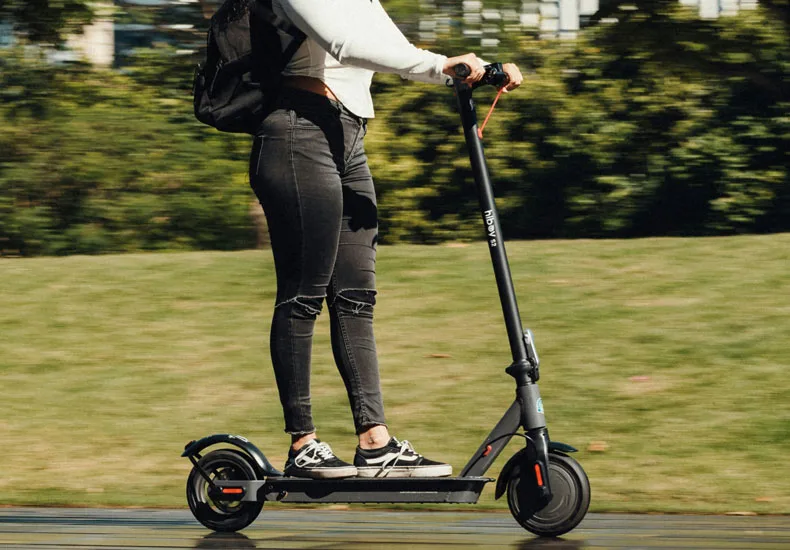
A scooter can look like an easy answer to a short journey, right up to the moment its rider discovers that a shop receipt is not a road permit. Oakville’s current rules distinguish stand-up e-scooters from compliant e-bikes, and neither category simply inherits the right to use every path that looks convenient.
That distinction matters to riders and pedestrians alike. Residents have described fast approaches around corners, startled dogs and bells arriving too late to be useful. Others see light electric transport as a way to close gaps between a home, a bus and a station. Oakville’s review has to consider both aims: making short journeys easier and keeping people safe in the spaces they share.
Source: Oakville: current e-scooter and e-bike rules
Source: Oakville: implementation review and end-of-2026 timeline
Source: October 2026 sidewalk scooter encounters and disagreements
Two wheels do not create one legal category
Oakville’s current answer is clearer than much of the online advice. Stand-up electric scooters are not permitted on public roads, sidewalks, multiuse trails or in parks. The town has not opted into Ontario’s pilot, so a helmet or an older rider does not suddenly make public scooter use permitted here. A retailer selling the machine does not change that.
E-bikes are different. The town describes bicycles with working pedals and electric assistance, permitted on public roads but not sidewalks, trails or parks. Ontario’s minimum operating age is 16, and helmets are required. Machines that resemble dirt bikes should not be casually included in the same label. Readers should match the device to the actual definition rather than trust whatever it was called in a sale listing.
Source: Oakville: current e-scooter and e-bike rules
A transport gap does not disappear because the rule is clear
The potential benefit is particularly easy to understand for someone whose local bus connection is inconvenient. A small electric vehicle might shorten the first or last part of a trip without requiring a car. The Town’s review explicitly considers transport connections and which parts of the road and trail network could accommodate scooters. It is studying a practical travel role, rather than merely whether the machines are popular.
The difficulty is that convenience for one user can become uncertainty for another. A pedestrian approaching a blind corner should not have to work out a vehicle’s speed before deciding whether the path is safe. Accessibility advocates, cyclists, drivers and walkers also have different needs. The project lists those impacts as part of its work, alongside enforcement and lessons from other municipalities.
For a buyer today, the choice remains governed by the current category. An e-bike needs working pedals and must meet provincial standards; it is not a marketing term covering every electric two-wheeler. A stand-up scooter remains prohibited on Oakville’s public network while the town considers joining the pilot. A future policy may alter that, but enthusiasm for the review is not permission to apply its hoped-for outcome early.
Source: Oakville: implementation review and end-of-2026 timeline
Source: Oakville: current e-scooter and e-bike rules
Near misses and useful transport are both real concerns
The practical disagreement concerns how to protect pedestrians while allowing useful movement through town. Careful riding is important, but it does not by itself settle which devices belong in which spaces. Clear categories and workable enforcement matter too. A rule that is difficult to explain or apply leaves both responsible riders and worried walkers with avoidable uncertainty.
Drivers and walkers also disagreed over reversing from driveways. A dog walker pointed out that cars can endanger people on sidewalks too. That does not excuse a speeding scooter. It does remind everyone that the person walking should not have to choose which vehicle gets the right to surprise them first. Safety is a shared obligation, even when the rules for the machines are different.
Source: August 2025 scooter concerns and conflicting advice
Source: July 2026 local implementation review discussion
Source: October 2026 sidewalk scooter encounters and disagreements
A review is not permission granted early
The town expects its implementation review to be presented to council at the end of 2026. It covers safety, accessibility, enforcement and possible first- and last-mile transport benefits. The survey has closed, but the project page still invites comments by email. This is a question under review, not an announcement that the rules have already changed.
For now, Oakville identifies Halton Regional Police as the authority enforcing e-scooter violations under the Highway Traffic Act; municipal officers cannot simply stop riders and issue those tickets. Anyone considering a scooter as a holiday present should read that current answer before wrapping it. The box may fit beautifully under a tree. That says remarkably little about where its contents can legally go.
Source: Oakville: implementation review and end-of-2026 timeline
Source: Oakville: current e-scooter and e-bike rules
Source: October 2026 sidewalk scooter encounters and disagreements
Questions people ask
Are e-scooters legal on Oakville roads?
Not currently. Oakville has not joined the provincial pilot, and the town says they are prohibited on public rights-of-way.
Source: Oakville: current e-scooter and e-bike rules
Can e-scooters use Oakville sidewalks?
No. The prohibition includes sidewalks, multiuse trails and parks as well as roads.
Source: Oakville: current e-scooter and e-bike rules
Does wearing a helmet make scooter use permitted?
No. Age or equipment precautions do not replace the local permission that Oakville has not granted.
Source: Oakville: current e-scooter and e-bike rules
Are e-bikes treated the same way?
No. Compliant e-bikes are permitted on public roads in Oakville, but not on sidewalks, trails or in parks.
Source: Oakville: current e-scooter and e-bike rules
How old must an e-bike rider be?
Ontario prohibits people under 16 from operating an e-bike. The town also states that a helmet is required.
Source: Oakville: current e-scooter and e-bike rules
Who enforces e-scooter offences?
The town identifies Halton Regional Police Service under the Highway Traffic Act. Municipal officers do not have the same stopping powers.
Source: Oakville: current e-scooter and e-bike rules
Has the e-scooter review changed the rules?
No. The review explores possible future permission; it is not current authorisation to ride.
Source: Oakville: implementation review and end-of-2026 timeline
When is the review expected at council?
The town anticipates presenting it at the end of 2026.
Source: Oakville: implementation review and end-of-2026 timeline
Can I still send feedback after the survey closed?
The project page invites comments to escooter@oakville.ca. The survey itself ended July 20, 2026.
Source: Oakville: implementation review and end-of-2026 timeline
What should I check before buying one as a gift?
Read the current Oakville device rules and confirm where it can actually be used. Being available for sale does not mean public riding is allowed.
Something changed? Tell us about a correction.